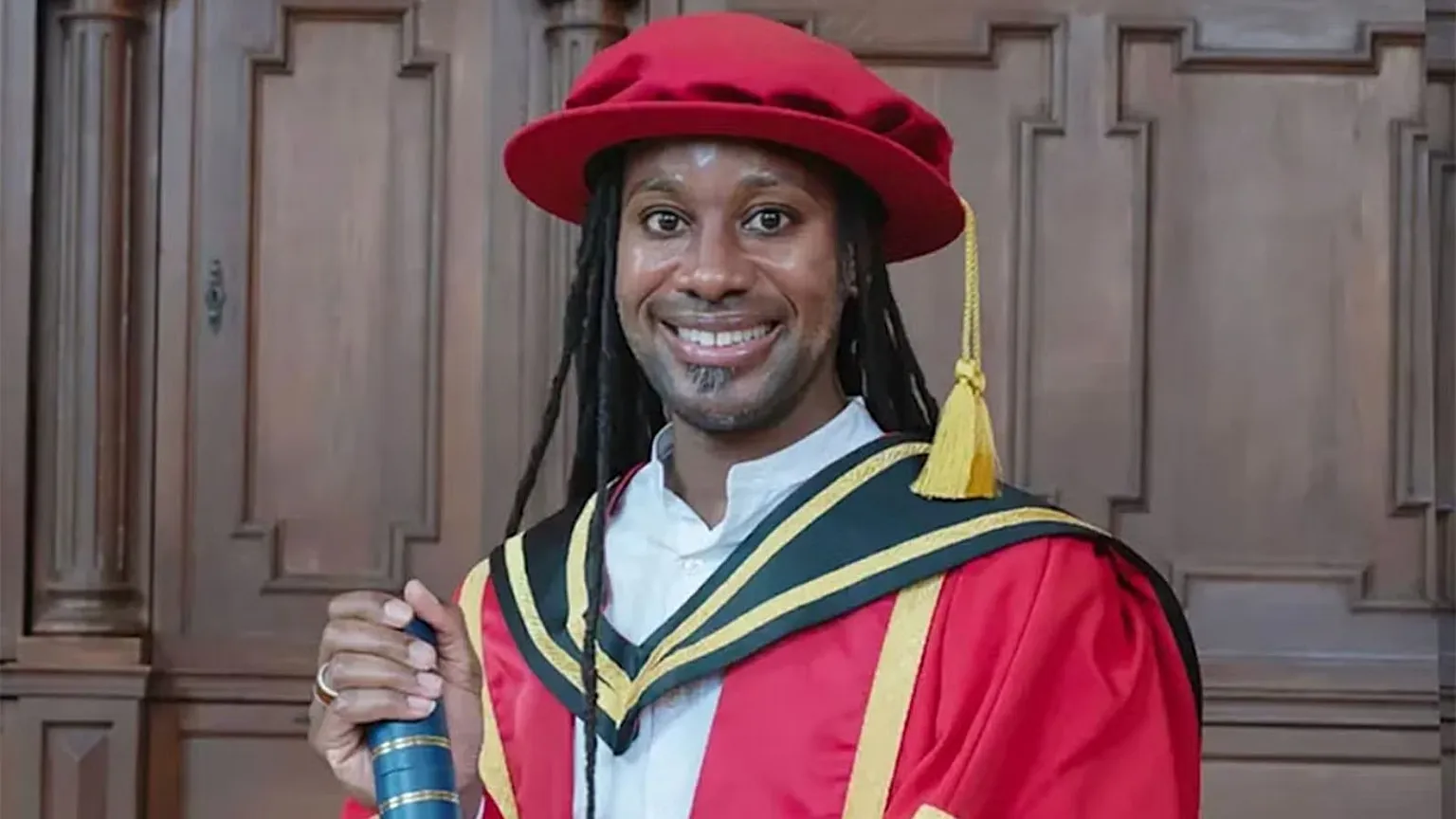
The death of Professor Jason Arday forces us to confront an uncomfortable question: who do we decide deserves to be scrutinised, and who do we decide deserves to be left alone?
In the days before his death, Arday was subjected to a relentless level of media attention. Allegations concerning his academic work and aspects of his personal history became the subject of an unending cycle of stories, commentary and online abuse. Cambridge eventually announced an investigation into his qualifications and career, and Arday resigned.
Days later, his death was announced.
His death is not an invitation to rewrite history or pretend that legitimate questions about academic integrity should never have been asked. Journalism has a vital role in holding powerful institutions and individuals to account. Universities must be able to explain how senior appointments are made. Academics must be accountable for their research. Serious allegations deserve proper investigation.
But there is a world of difference between legitimate scrutiny and a feeding frenzy.
And Britain should be asking why the same ferocity in accountability is so rarely applied to the people who actually hold political power, or are actively seeking it.
Because while Jason Arday was an academic, Nigel Farage is a politician who has repeatedly made clear that he wants to become Prime Minister of the United Kingdom.
That distinction matters.
Arday did not ask the British public to put him in Downing Street. He was not asking for a mandate to govern tens of millions of people. Farage is. And yet, when it comes to the people who want political power, the standards of scrutiny can feel remarkably different.
Farage has built his political career on presenting himself as an outsider fighting an unaccountable establishment. He now leads Reform UK and has openly predicted that he could become Britain's next Prime Minister. That ambition should come with extraordinary scrutiny.
Instead, we have repeatedly watched political theatre become the story while serious questions about money, transparency and accountability struggle to receive anything approaching the intensity directed at Arday.
Only days ago, Parliament's standards watchdog resumed its investigation into Farage after his victory in the Clacton by-election. The investigation concerns, among other matters, an undeclared £5 million gift from cryptocurrency billionaire Christopher Harborne. Farage has said he did not believe the gift needed to be declared and has denied wrongdoing.
There are wider questions, too.
Investigations have examined donations and financial transactions involving senior Reform figures. Bankers have raised potential money-laundering concerns about transactions involving the party and its leadership, while police have separately investigated donations made to Reform through a company controlled by deputy leader Richard Tice. None of this, by itself, establishes criminal wrongdoing — but it unquestionably raises questions of enormous public interest when the person at the centre of the political movement says he wants to run the country.
So where is the outrage? Where is the daily forensic examination of the people surrounding Farage? Where is the relentless questioning of his finances, his political relationships, his donors, his claims and the people who may stand to gain from a Reform government? Where is the same appetite to examine every inconsistency, every association and every unanswered question?
If we are going to have a culture of scrutiny and accountability, let us have one that follows power. Not one that simply follows whoever is easiest to turn into a spectacle.
The media's treatment of Arday should also force us to confront something darker. The intensity of scrutiny was not experienced in a vacuum. Arday was Britain's youngest Black professor at Cambridge. His rise had been celebrated as a symbol of extraordinary achievement and progress. His subsequent fall became, for some sections of the media and online right, something to revel in.
The coverage did not simply ask whether allegations were true. It became a referendum on diversity. On race. On whether someone like Arday deserved to occupy an elite institution. His appointment was repeatedly framed through the politics of representation, with some coverage explicitly connecting the controversy to diversity and equality policies. .
Because there is a particular cruelty in watching a Black academic's life story become a national spectacle, his achievements dissected, his credibility attacked and his personal history subjected to an almost forensic examination — while political figures with vastly greater power and vastly greater consequences for the public are too often treated primarily as entertainers.
We should be capable of holding two truths at once. There were legitimate questions about Jason Arday's academic record. And the scale, tone and relentlessness of the public scrutiny can still be profoundly disturbing. Those truths are not mutually exclusive.
Indeed, they are precisely why we need a serious conversation about media accountability.
Prime Minister Andy Burnham has called for reflection following Arday's death, after broadcasters, politicians and academics raised concerns about the disproportionate nature of the public hounding he experienced.
That reflection cannot simply mean asking whether individual journalists got particular facts right.
It must ask a much bigger question:
What happens when the machinery of the modern media decides that a person is the story?
Britain deserves better than a media culture in which the people with the least political power can receive the most ferocious scrutiny, while those openly seeking the highest political office can sometimes escape the same intensity.
Fair Vote UK has long argued that democracy is not simply about putting a cross on a ballot paper. It is about accountability, transparency, fair representation and the ability of citizens to make informed choices about who should hold power.
That requires scrutiny. But scrutiny must be proportionate to power. If Nigel Farage wants to be Prime Minister, then scrutinise him. Scrutinise what a Reform government would actually mean for Britain. Because democracy needs scrutiny. But it needs scrutiny aimed at power — not a feeding frenzy aimed at people who cannot fight back.
At Fair Vote, we believe this is ultimately a question of what kind of democracy we want to build. A healthy democracy demands scrutiny, transparency and accountability, but those principles must apply most rigorously to those who seek political power and influence. That is why we support the Representation of the People Bill and its measures to strengthen our democracy, including automatic voter registration and stronger controls on political finance. But reform cannot stop there.
We need a political system in which voters have the information, representation and protections they need to hold those seeking their votes to account. The lesson of Jason Arday's death should not be that scrutiny is wrong. It should be that scrutiny must follow power, accountability must follow influence, and our democracy must never confuse public interest with public spectacle. That is the democracy Fair Vote is fighting for.


