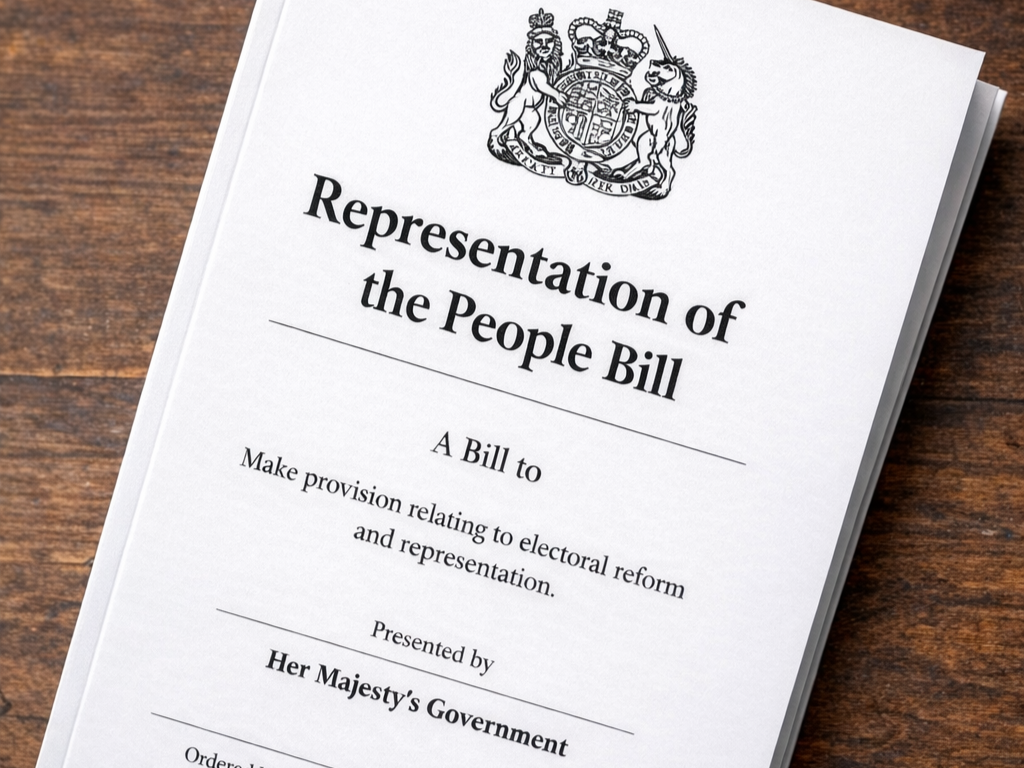
The Representation of the People Bill passed its Report Stage and Third Reading in the House of Commons yesterday, with MPs voting 411 to 102 to send the legislation on to the House of Lords.
The Bill now contains a number of important reforms that will make our democracy more accessible and resilient. Yet some of the most significant weaknesses in our electoral system remain untouched.
Important progress on participation
The biggest step forward is the extension of the franchise to 16- and 17-year-olds in UK Parliamentary and local elections in England and Northern Ireland.
Votes at 16 will bring hundreds of thousands of young people into our democracy and bring the UK closer to the approach already established in Scotland and Wales. But extending the franchise must go hand in hand with ensuring people can actually register and vote.
That is why the Bill's movement towards automated voter registration is so important. Between 7 and 8 million eligible citizens are estimated to be incorrectly registered or missing from the electoral register altogether. The current registration system leaves some of the people most likely to be excluded — including young people, private renters and some minoritised communities — facing the greatest barriers to participation.
The Bill also expands the forms of identification that can be used at polling stations, including bank cards, and provides for digital Voter Authority Certificates. These changes have the potential to make voting more accessible, although we will continue to scrutinise how the new system works in practice.
Stronger protections against foreign money and political interference
There has also been progress on political finance.
The Government has secured a £100,000 annual cap on donations and loans from individuals registered as overseas electors, alongside a ban on cryptocurrency donations. The crypto prohibition will apply retrospectively to donations made from 25 March 2026, with parties given 30 days to return donations already received once the new rules come into force.
Political finance rules must keep pace with the realities of modern politics, where technology, international wealth and increasingly sophisticated methods of moving money can create new risks to democratic integrity.
The missing piece: big money in British politics
The most glaring omission from the Bill remains a cap on domestic political donations.
The Government's proposals will restrict some forms of overseas money while leaving wealthy UK-based individuals able to donate millions of pounds to political parties.
That is a fundamental gap.
The concern is not simply where political money comes from. It is how much political influence one person can buy.
Stella Creasy MP's proposed amendment offered a route forward, with a £500,000 initial annual cap falling to £100,000, alongside safeguards designed to protect member-funded trade union political activity. The amendment was not adopted.
This is particularly disappointing given the Government's own recognition that concentrated financial influence presents a threat to public confidence in politics. A democracy cannot be truly fair if the size of an individual's bank account continues to determine how much influence they have in British politics.
A Bill that expands the franchise — without fully fixing representation
There are other important gaps.
The Bill does not establish a statutory timetable for the full rollout of automated voter registration. It does not deliver comprehensive reforms to digital campaigning and political advertising. It does not establish a National Commission on Electoral Reform. And it does not address the fundamental unfairness of First Past the Post.
These are not peripheral issues.
A democracy is about more than the mechanics of casting a ballot. It is about whether people are able to participate, whether political power is fairly distributed, whether voters can trust the information they receive, and whether their votes translate into meaningful representation.
That is why civil society organisations have continued to argue that the Bill should be seen as a foundation rather than a finished product.
Fair Vote and our partners have been calling for stronger measures on automatic voter registration, political finance, candidate diversity, access to elected office, digital campaigning, overseas voting, the independence of the Electoral Commission and long-term electoral reform.
Some of those arguments have secured real movement.
Others have not.
And that means the work continues.
The next battleground is the House of Lords
Yesterday's vote did not end the journey of the Representation of the People Bill. It began its next chapter.
The Bill will now proceed to the House of Lords, where peers will have the opportunity to scrutinise the legislation, challenge its weaknesses and propose improvements.
Civil society will be there too.
We have shown that organisations working on different parts of the democratic system can come together around a common principle: our democracy should belong to all of us, not simply those with the greatest wealth, the easiest access to power or the loudest platform.
The Commons has taken an important step forward. Now the Lords must ask whether this Bill is ambitious enough for the democratic challenges Britain faces.
And civil society must continue asking the same question.
Because passing a Bill is not the same as fixing our democracy.
The Representation of the People Bill is moving forward. So are we.


