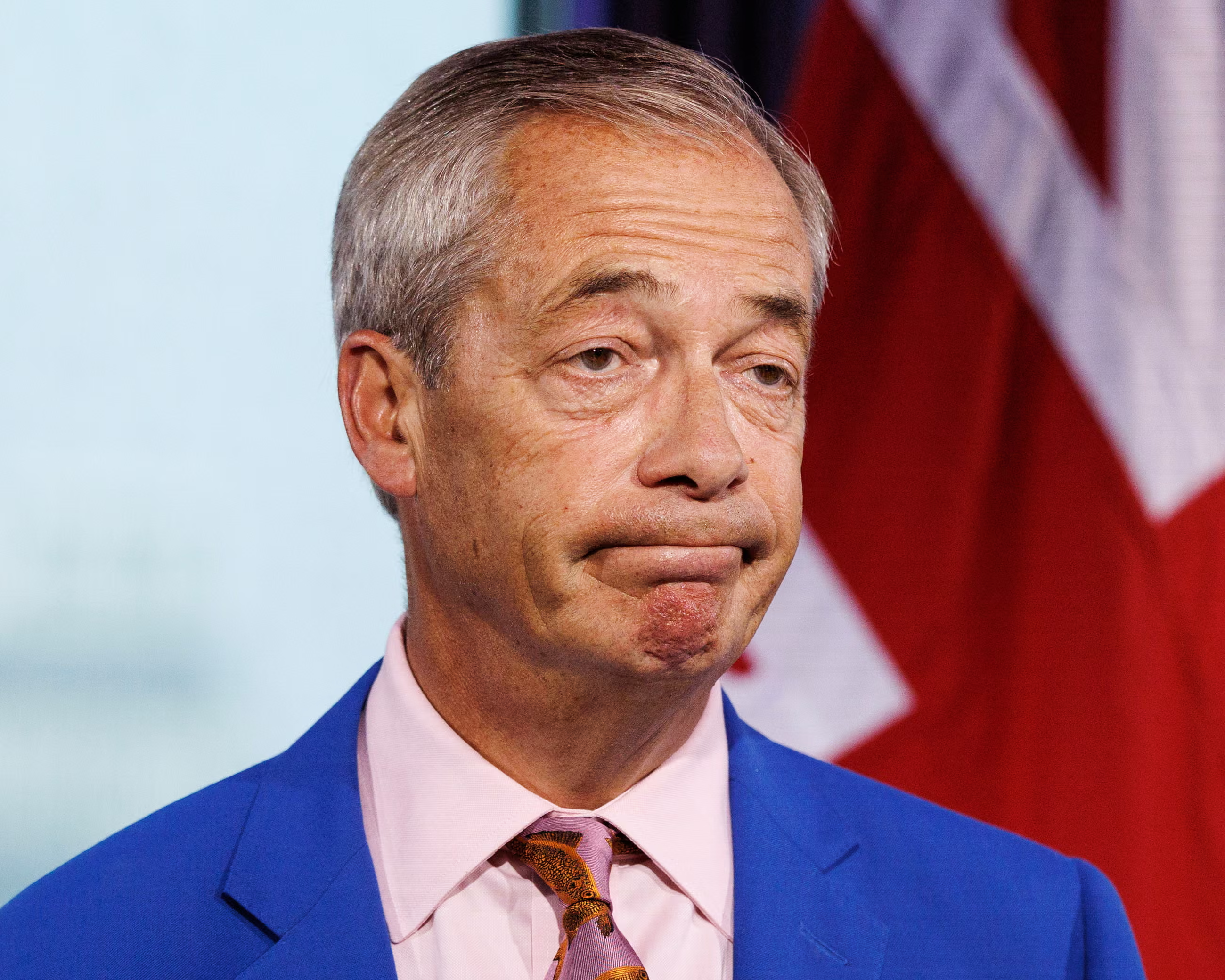
Nigel Farage's decision to resign as leader of Reform UK has thrust political funding back into the spotlight, reigniting long-standing questions about the role of money in British democracy and exposing why Parliament now has an opportunity to strengthen the rules governing political finance.
The announcement comes as Farage faces scrutiny over millions of pounds in undeclared financial support, including a reported £5 million gift from cryptocurrency billionaire Christopher Harborne and separate allegations concerning financial support from close associate George Cottrell. Farage denies any wrongdoing and maintains that the funds were personal gifts rather than political donations.
While the investigations will determine whether existing rules have been broken, the controversy has highlighted a broader issue: whether the rules themselves are sufficient to protect the integrity of UK democracy.
The UK currently places no cap on the amount a permissible donor can give to a political party, candidate or campaigner. As a result, a small number of wealthy individuals are able to contribute millions of pounds each year, creating concerns about unequal political influence and undermining public confidence that democratic decisions are made in the public interest rather than shaped by financial power.
Against this backdrop, two amendments tabled to the Representation of the People Bill offer Parliament an important opportunity to modernise Britain's political finance system.
Curbing the influence of big money
New Clause 71 would introduce a £100,000 annual cap on donations to registered political parties, recognised third parties, candidates and other regulated campaigners.
The proposal would not prevent individuals from supporting political causes they believe in. Rather, it would ensure that no single donor is able to provide millions of pounds in financial support, encouraging political parties to build broader, more representative bases of funding instead of relying on a handful of exceptionally wealthy backers.
The amendment includes exemptions for trade union affiliation fees, certain public funds, registered societies and bequests, while maintaining transparency requirements around union political funds.
Had such a cap already been in place, the scale of donations currently dominating headlines would not have been possible. More importantly, it would help reduce both the reality and the perception that political influence can be secured through extraordinary financial contributions.
Reducing the campaign spending arms race
New Clause 70 would implement recommendations made by the Committee on Standards in Public Life by reducing the national campaign spending limits for political parties.
Over recent years, election campaigns have become increasingly expensive, with parties spending vast sums on advertising, digital campaigning and voter outreach. Lower spending limits would help create a more level playing field between parties, reducing the advantage enjoyed by those able to attract the largest financial contributions.
Healthy democratic competition should be driven by ideas, policies and public engagement—not by which campaign can afford to spend the most.
Why these reforms matter
The current scrutiny surrounding Nigel Farage demonstrates that public concern extends beyond whether individual politicians have complied with existing rules. Increasingly, voters are questioning whether Britain's political finance framework is capable of preventing excessive financial influence altogether.
Strong political finance rules are not about targeting one politician or one political party. They are about ensuring that every voter can have confidence that elected representatives are accountable to the public, not to a small number of wealthy donors.
Introducing a £100,000 donation cap alongside lower national campaign spending limits would represent one of the most significant reforms to political finance in decades. Together, these measures would reduce the concentration of financial influence, strengthen transparency and help restore public trust in the democratic process.
The amendments before Parliament would not resolve every challenge facing the UK's electoral system, but they would implement long-standing recommendations from independent experts and take meaningful steps towards limiting the influence of big money in politics.
At a time when questions about political funding are once again dominating public debate, Parliament has an opportunity to show that democracy should be shaped by voters—not by the size of anyone's bank balance.


