The Representation of the People Bill is a timely recognition of the urgent need for reforming political finance regulations, with important proposals designed to curtail the influence of foreign money in our politics. However, political parties' growing dependence on a handful of wealthy backers – a significant corruption risk – remains untouched.
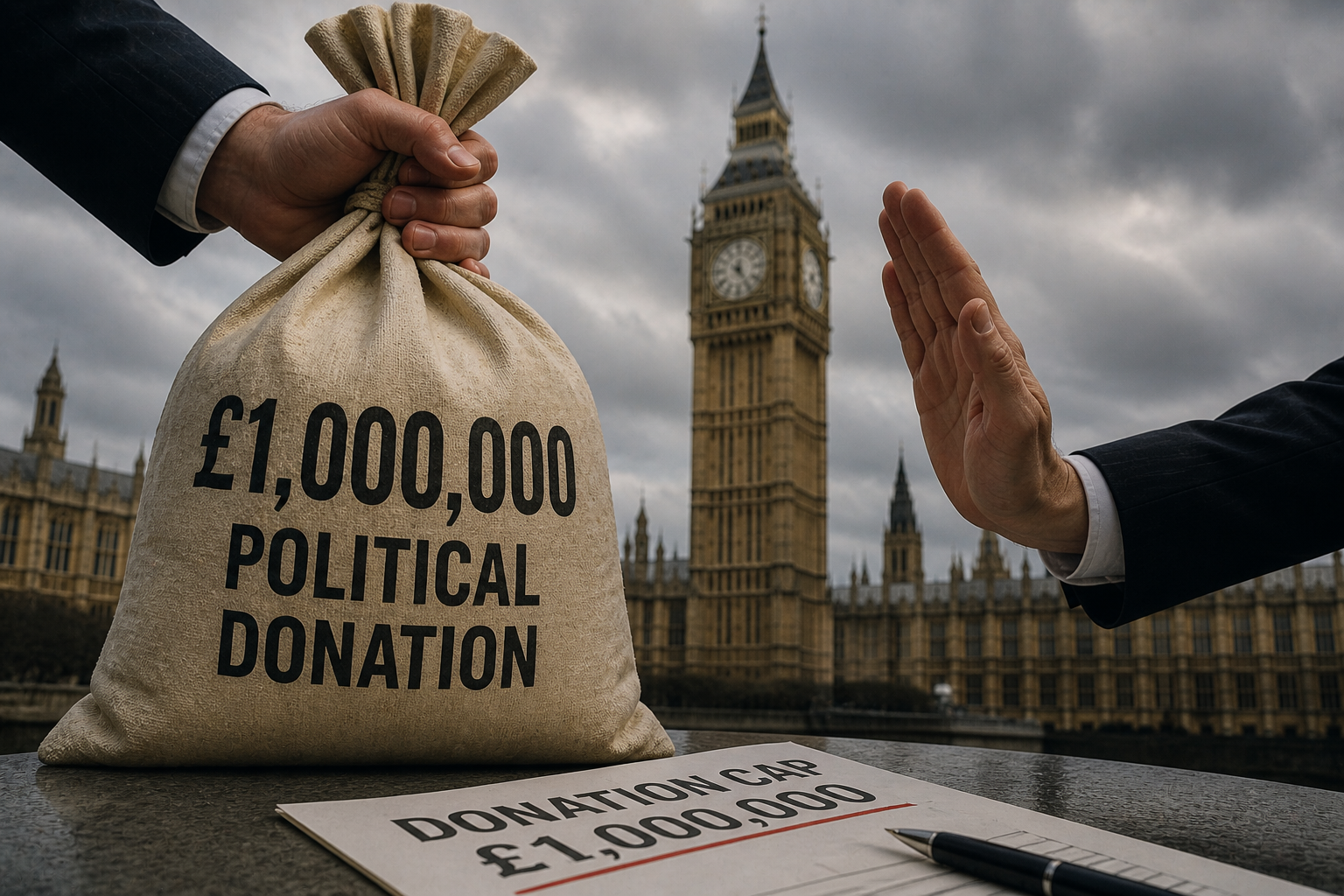
A recently announce damendment to introduce a donation cap of £1 million is not enough of a constraint for those currently shaping political finance. It sits comfortably within the existing scale of major donations and does little to disrupt the concentration of influence among a small number of wealthy individuals. By setting the cap at this level, the system effectively endorses the idea that seven-figure contributions are a legitimate and acceptable feature of democratic participation.
Ben Delo, a billionaire previously based abroad, has indicated his intention to return to the UK so that he can make unlimited donations, bringing with him the ability to give substantial political donations to parties such as Reform UK. This case illustrates a broader vulnerability in the system: eligibility rules and high caps together create conditions in which significant financial influence can be reintroduced with relative ease. A £1 million cap does not mitigate this risk. It accommodates it.
The think tank Institute for Public Policy Research (IPPR) has been explicit about what this moment reveals. In response to reports of a £5 million donation tied to Farage, its executive director warned that it is becoming increasingly difficult to ignore “the growing weight that extremely wealthy donors” carry in British politics, both in scale and proximity to power.
The issue is not simply the presence of money in politics, but the degree to which financial power is concentrated. Organisations working on electoral reform, including Fair Vote UK, have consistently argued that without significantly lower caps, this concentration will persist, leaving political parties structurally dependent on a narrow donor base at the obvious expense of ordinary people.
It is also important to recognise that the impact of large donations is not linear. High-value contributions do more than provide financial support; they can shape access, influence strategic priorities, and affect the overall direction of political engagement. When a single donor can contribute at this level, the relationship between wealth and political voice becomes qualitatively different, not merely a matter of degree.
A lower cap—closer to £100,000—would not eliminate disparities entirely, but it would begin to address the structural imbalance by limiting the extent to which any one individual can dominate funding streams. It would require parties to diversify their sources of support and reduce reliance on a small number of high-value donors.
Civil society organisations are broadly aligned in their assessment. Proposals such as a £1 million cap are viewed as insufficient to address the underlying problem of concentrated financial influence. What is required, in their view, is a framework that meaningfully constrains large donations, strengthens rules around donor eligibility, and reduces systemic dependence on extreme wealth. Without these changes, the fundamental dynamics of political financing remain unchanged.


